
 Image 1 of 1
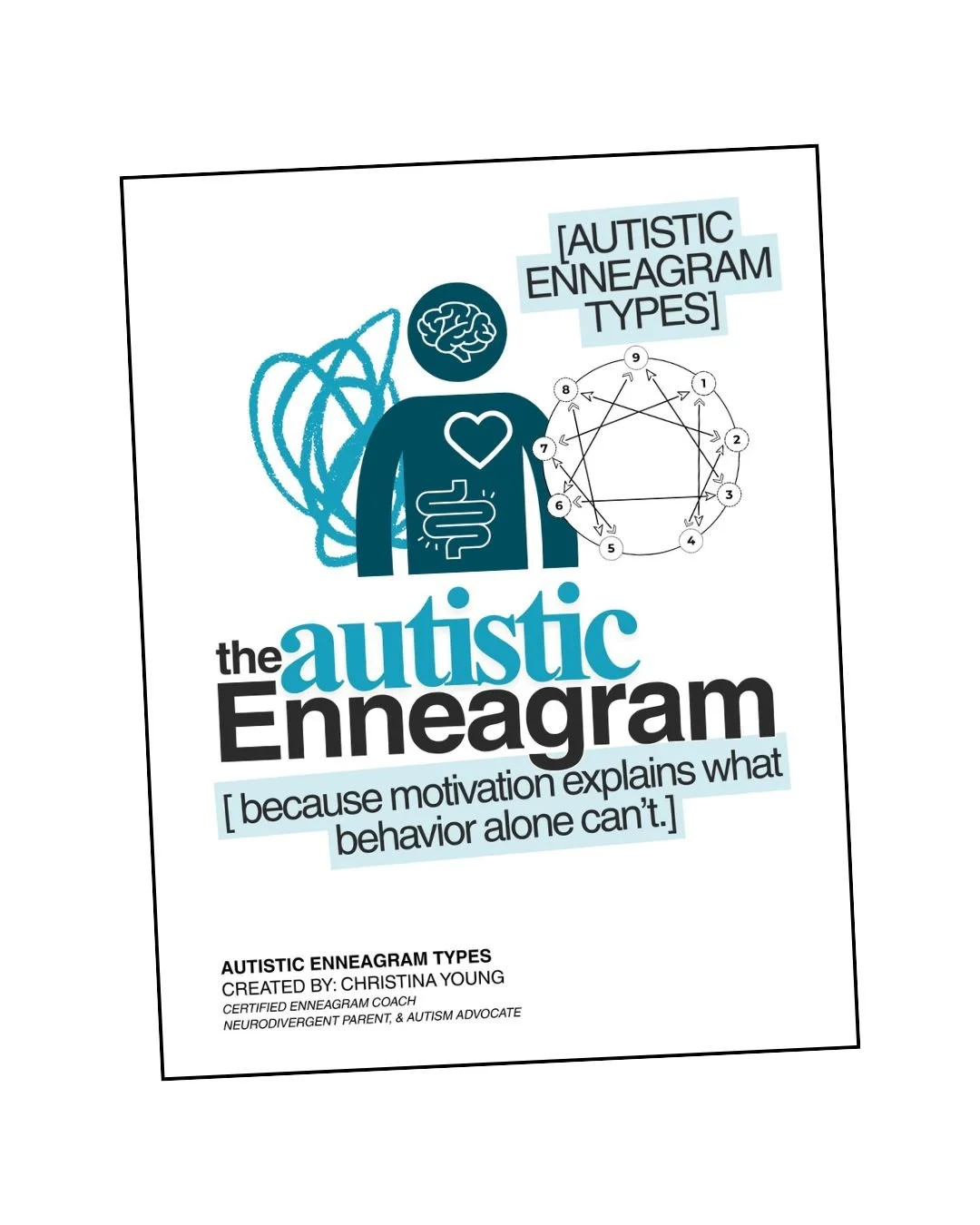
Autistic individuals express Enneagram patterns in ways that may look different from traditional descriptions — and that difference matters. For example, an autistic Enneagram Type may experience stress responses more intensely, skip emotional stages entirely, or show behaviors that are often misunderstood as “out of character” for that type. These variations are not contradictions; they are adaptations shaped by neurodivergent nervous systems. Learning how each Enneagram type can uniquely express autism opens the door for more accurate teaching, better support strategies, and fewer harmful assumptions.
Autistic individuals express Enneagram patterns in ways that may look different from traditional descriptions — and that difference matters. For example, an autistic Enneagram Type may experience stress responses more intensely, skip emotional stages entirely, or show behaviors that are often misunderstood as “out of character” for that type. These variations are not contradictions; they are adaptations shaped by neurodivergent nervous systems. Learning how each Enneagram type can uniquely express autism opens the door for more accurate teaching, better support strategies, and fewer harmful assumptions.