RESOURCES
If you’re looking for practical tools you can use right away, here are some guides, frameworks, and downloadable supports created specifically for parents and educators.
Free Resources
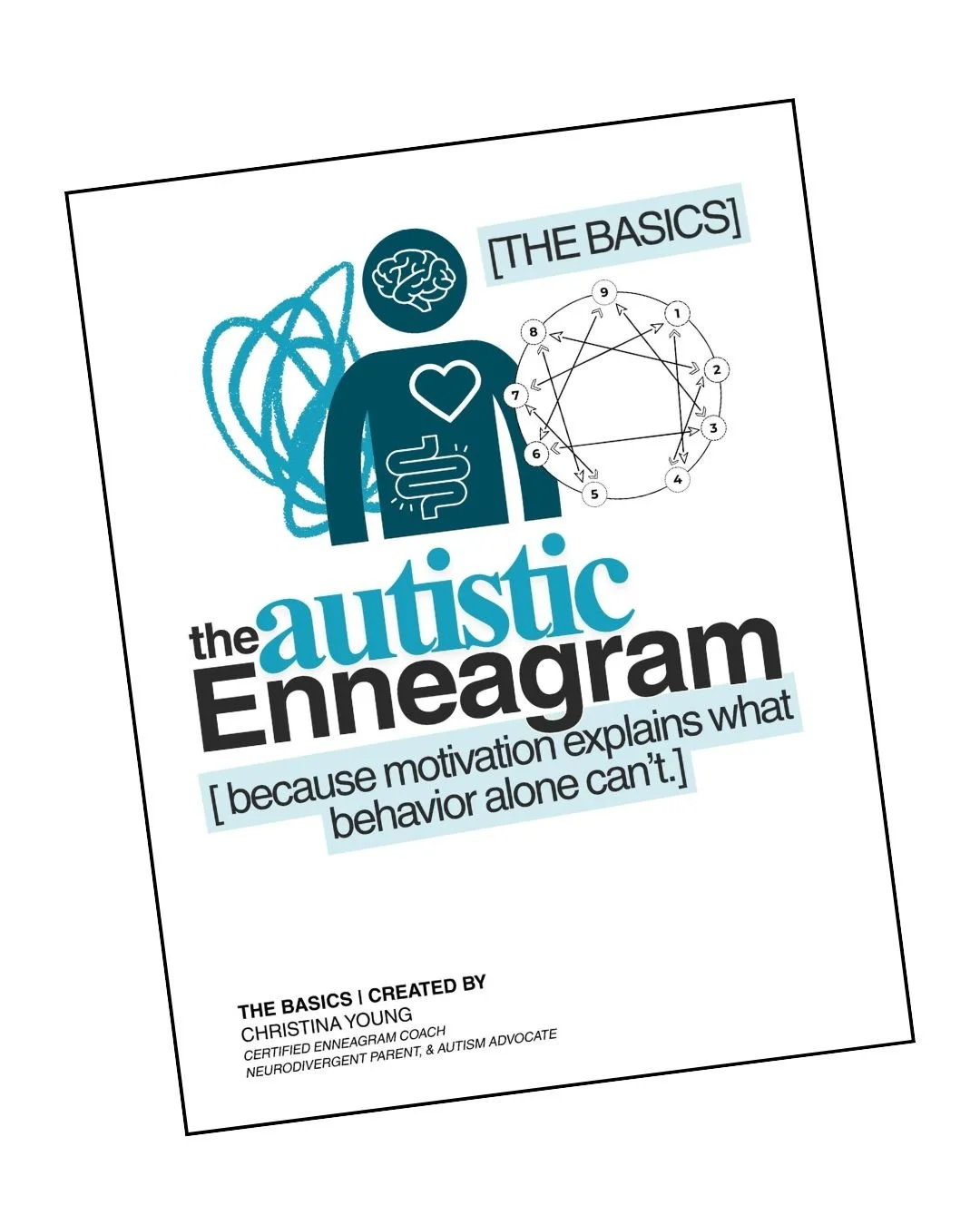
The Enneagram & Autism | The Basics + Autism Nuance
Not sure where to start? This free fundamentals guide outlines the basic information needed to understand the Enneagram, and how to use it to support autistic children.
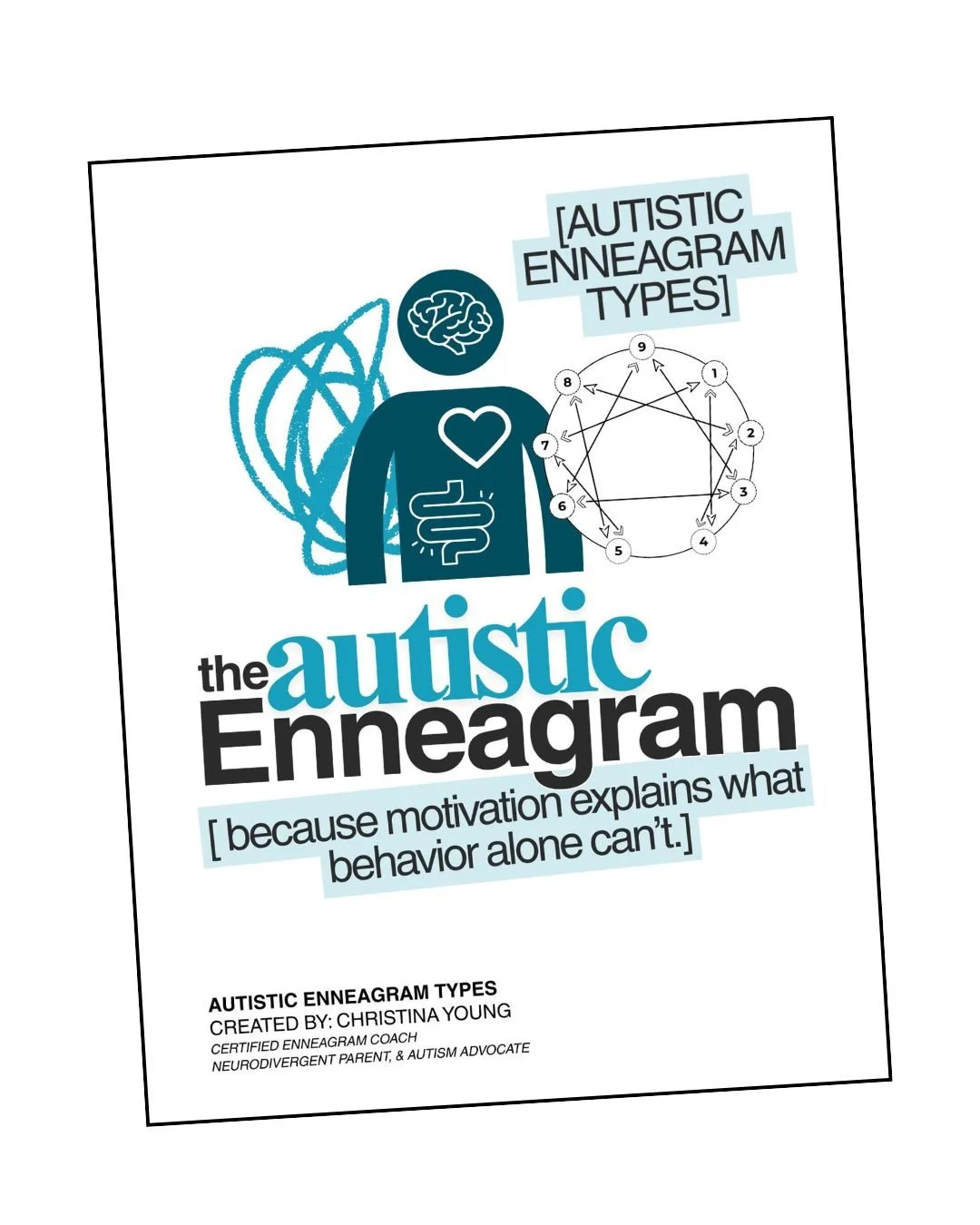
The 9 Enneagram Types with Autistic Nuance
Autistic individuals express Enneagram patterns in ways that may look different from traditional descriptions — and that difference matters. For example, an autistic Enneagram Type may experience stress responses more intensely, skip emotional stages entirely, or show behaviors that are often misunderstood as “out of character” for that type. These variations are not contradictions; they are adaptations shaped by neurodivergent nervous systems. Learning how each Enneagram type can uniquely express autism opens the door for more accurate teaching, better support strategies,
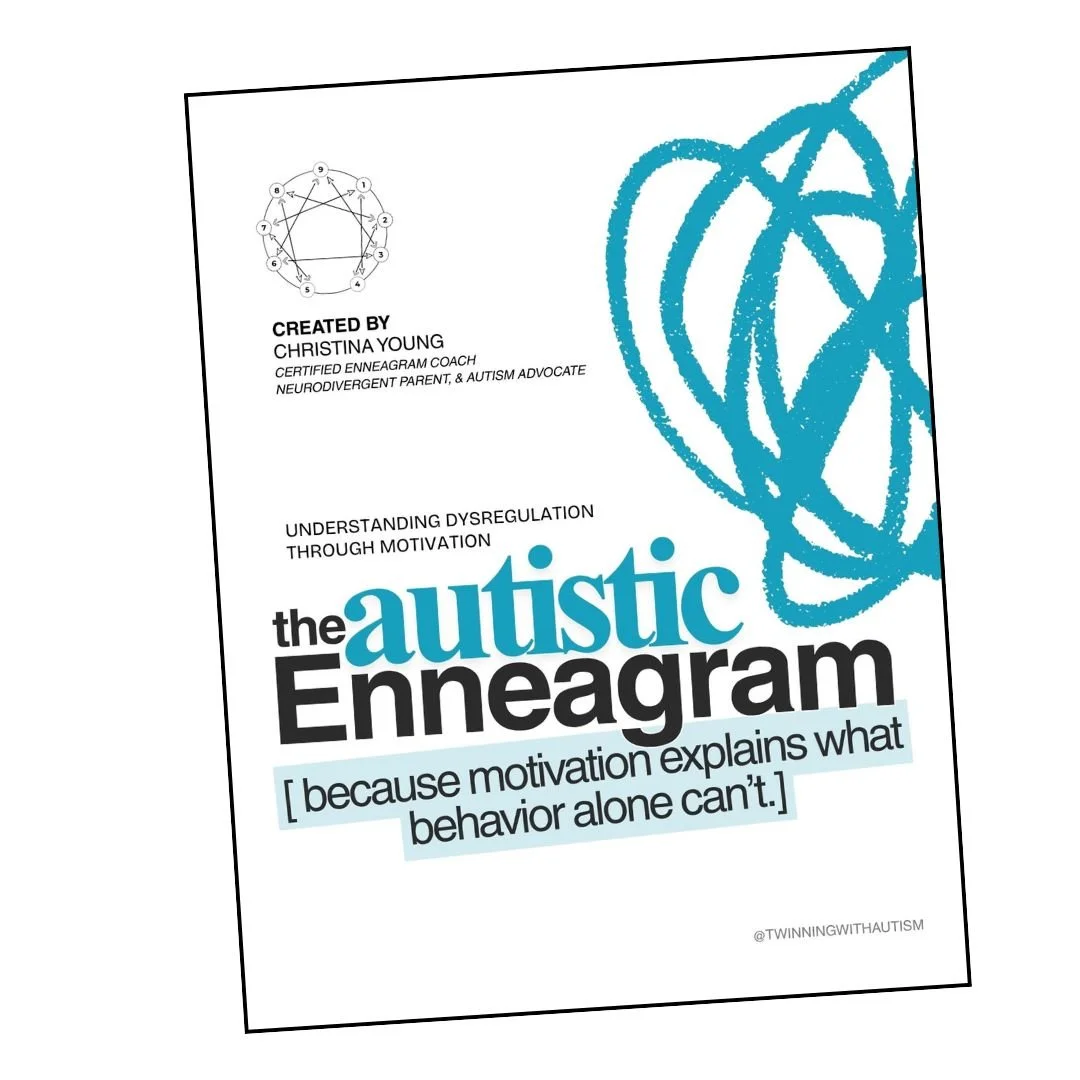
The Enneagram Guide to Supporting Dysregulation
Dysregulation is the consistent struggle autistics navigate, no matter what their triggers. This guide provides insight into what each autistic enneagram type might face as triggers, while identifying tailored supports and accommodations to help in achieving regulation again.
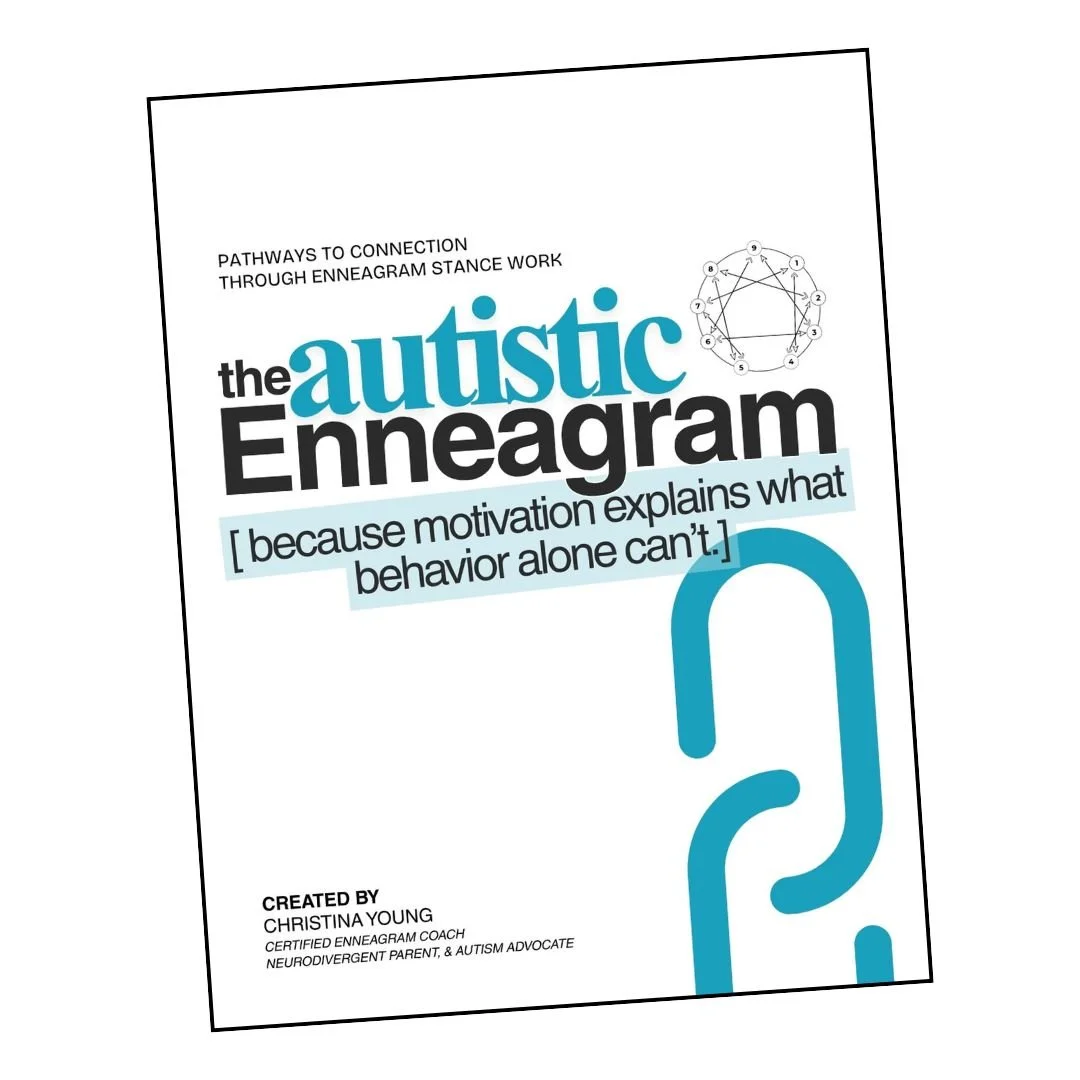
PATHWAYS TO CONNECTION: Through Enneagram Stance Work
For autistic children—who experience stress more frequently and intensely—stance becomes a powerful shortcut to understanding:
Why meltdowns escalate
Why reassurance sometimes backfires
Why shutdowns are often misread as refusal
When adults understand stance, they stop reacting to behavior—and start supporting regulation. This compassionate 15-page guide helps to:
Understand stress responses without blame
Identify stance before identifying type
Choose supports that actually calm the nervous system
Reduce power struggles at home
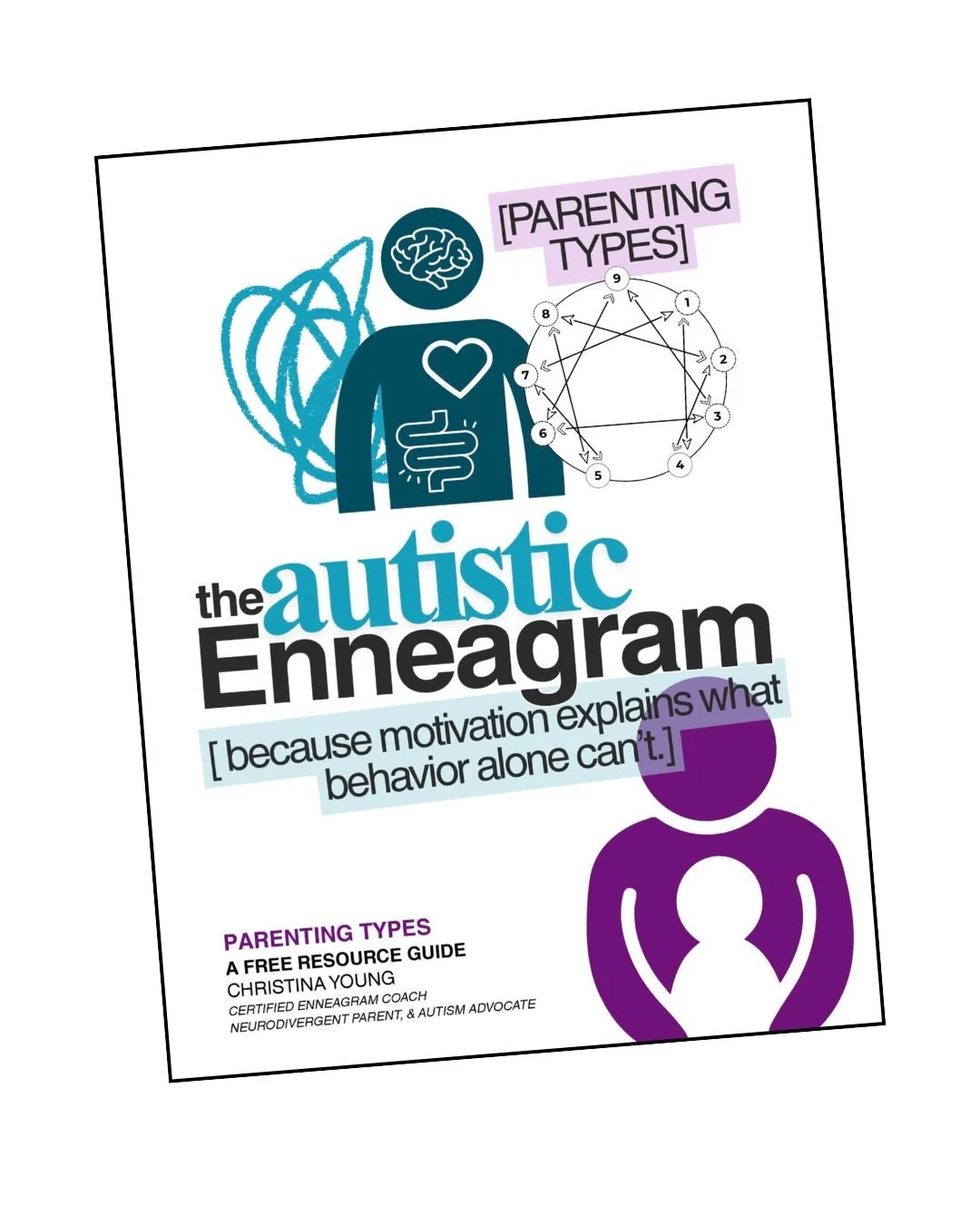
The 9 Types of Parents
The Enneagram describes nine distinct patterns for how people experience the world and respond when things feel like too much. Each type brings unique strengths — and unique stress responses — into parenting.
Understanding these nine parenting types can help parents of autistic children recognize why certain strategies work for some families and not others — and how to adjust support based on nervous system needs rather than behavior alone.
These guides are far longer versions of some of the free guides you’ll see above. Each goes into more research and greater detail on the topics briefly explained in the free versions.
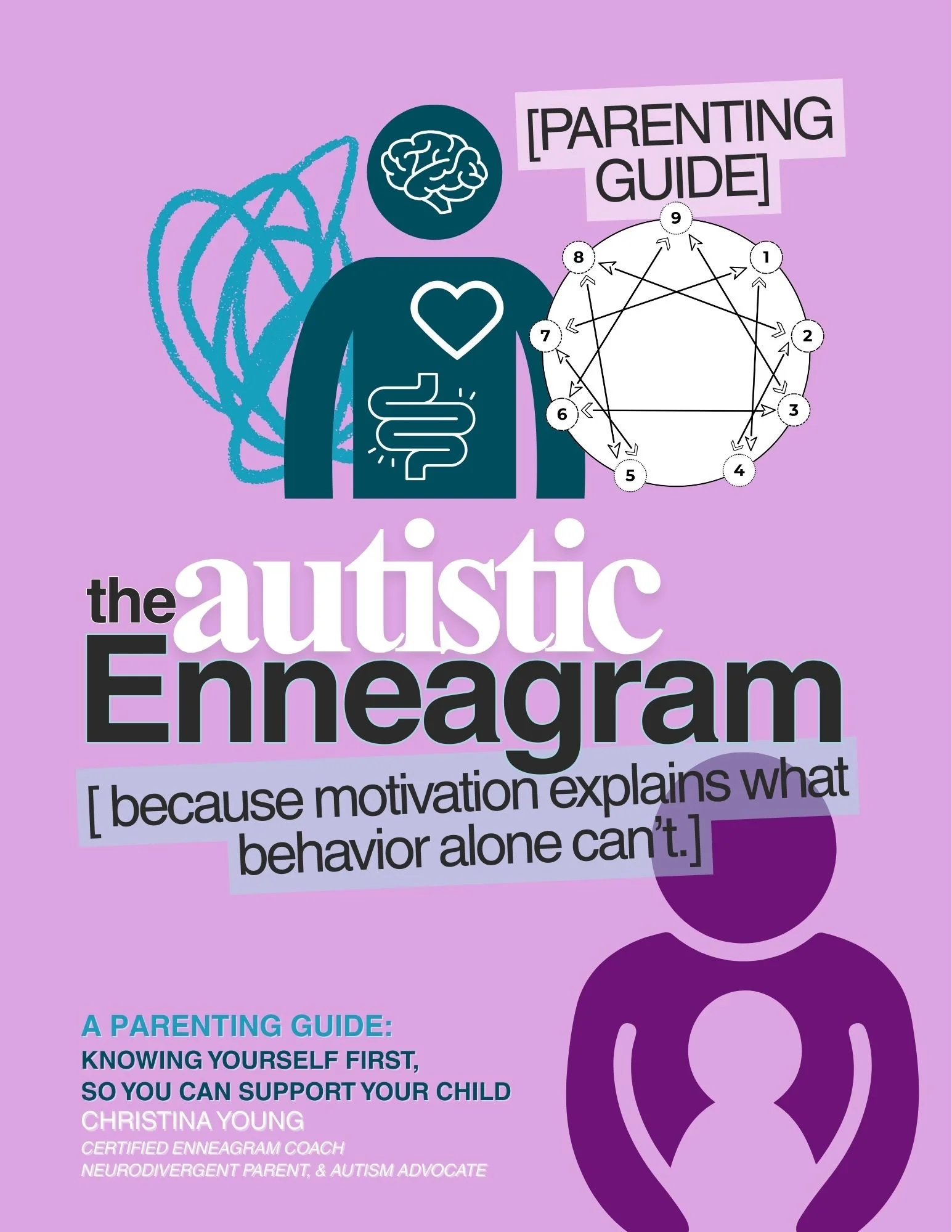
A Parenting Guide to knowing yourself better by understanding your Enneagram Type, so that you can better support your neurodivergent child. This guide provides greater detail about each Parenting Type, clues to understanding your own strategies for self-regulation during the stresses of parenting neurodivergent children, and an introduction on stance work in supporting your child through their own stress.
RESOURCES TO PURCHASE
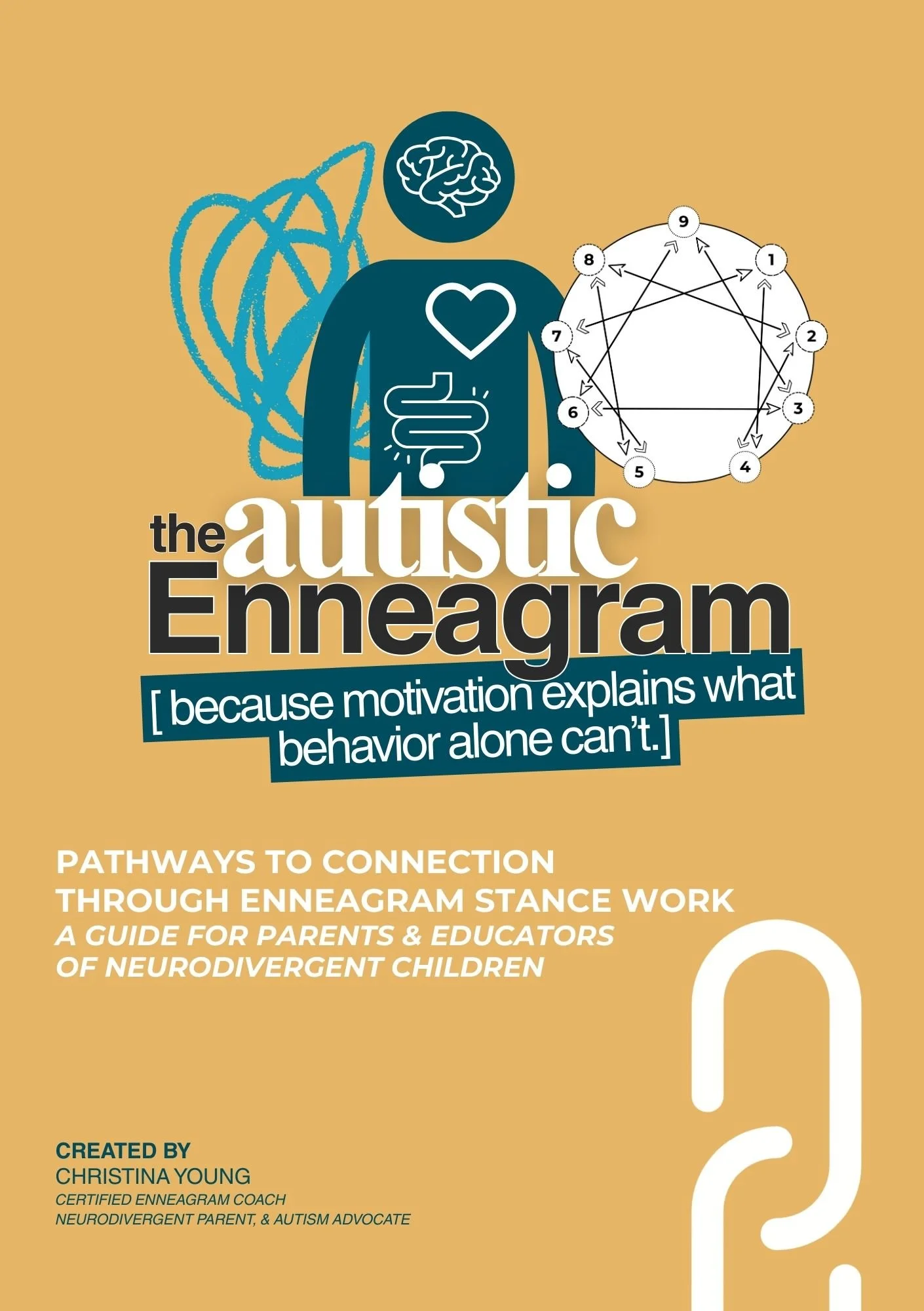
For autistic children—who experience stress more frequently and intensely—stance becomes a powerful shortcut to understanding:
Why meltdowns escalate
Why reassurance sometimes backfires
Why shutdowns are often misread as refusal
This resource guide was designed to take the basic premise of how to support neurodivergent children through Enneagram Stance Work, and dive deeper into real accommodations and strategies that can be used at home and in the classroom.

COMING SOON:
AUTISM & THE ENNEAGRAM
A Look at Autism and The Enneagram
For parents, educators, and anyone teaching the enneagram that hopes to better serve the communities in which they teach: this guide is the culmination of five years of researching the enneagram, while raising three autistic children. It is over 100 pages on what autism is, how understanding the differences between a neurotype and a personality type, and how all of that information can be turned into wisdom that supports neurodivergent children at home and in the classroom.
Still in its final draft phase, it’s not yet ready to purchase! But if you wish to be notified when it’s ready for sale, please complete this form below and we will email you as soon as it’s available!
HOW TO USE THE ENNEAGRAM SAFELY WITH KIDS
The Enneagram is a powerful tool—but with children, power must always be held with care.
The Enneagram should never be used to:
Label or limit a child
Explain away unmet support needs
Predict outcomes or pathologize behavior
Replace clinical diagnosis or professional care
Children do not “have” an Enneagram type the way adults do. Their personalities are still forming, their nervous systems are still developing, and their environments play a massive role in how traits show up.
The Enneagram is first and foremost a tool for self-awareness—which means it belongs in the hands of adults before it is ever applied to children.
In this work, the Enneagram is used to:
Help adults reflect on their own triggers and expectations
Understand what a child may be protecting or needing
Increase compassion during moments of stress
Support regulation, not compliance
The goal is never to say, “This is who you are.”
The goal is to ask, “What might help you feel safer right now?”
When used with humility, consent, and curiosity, the Enneagram becomes a bridge—one that protects relationship, honors neurodiversity, and keeps the child’s humanity at the center of every decision.
Want to learn more about the Enneagram?
The following are incredible teachers and work I suggest if you are looking to learn more about the Enneagram!
Suzanne Stabile: The Enneagram Godmother
Tyler Zach: The Enneasummit & Type-ish
Your Next Great Read:



Your Next Great LISTEN: