
WELCOME ParentS
Thanks for your interest in understanding how understand the motivation behind the behavior (aka: The Enneagram) can help us (yes, us - I’m right there with you!) to better support our neurodivergent kiddos. I’ve designed this page for parents who are new to the Enneagram but want to learn more. As a neurodivergent mom to three autistic children with ADHD, I’ve worked with this theory for the last five years and want to share what I’ve learned in case it can help parents like it’s helped us in supporting our kiddos from survival mode, to thriving.
-
Yes, the Enneagram is helpufl for parents of autistic children.
When used as a self-awareness tool (not a diagnostic label), the Enneagram helps parents understand their own stress responses, which directly impacts how effectively they can support an autistic child during dysregulation. -
No. This work focuses on nervous system regulation, connection, and understanding — not compliance, rewards, or punishment.
-
No. This framework starts with the parent. Understanding yourself creates the foundation for more attuned support.
The Enneagram & PARENTING
The Enneagram is a framework that helps explain why people respond the way they do under stress — especially parents supporting autistic and neurodivergent children.
Rather than focusing on behavior alone, it looks at the underlying motivations, fears, and patterns that shape how we show up — particularly during moments of dysregulation, overwhelm, or burnout.
When applied to parenting, the Enneagram becomes a tool for self-awareness, helping parents stay regulated, reduce power struggles, and support their autistic child with more calm, clarity, and compassion.
START WITH YOU FIRST
When parenting feels overwhelming, it’s natural to look for answers about your child first.
But the most effective place to begin is with yourself.
By identifying your own parenting pattern, you’ll gain a clearer understanding of how you respond to stress, control, and connection — which directly impacts how your child experiences support during moments of emotional or sensory overwhelm.
THE 9 PARENTING TYPES
The Enneagram describes nine distinct patterns for how people experience the world and respond when things feel like too much. Each type brings unique strengths — and unique stress responses — into parenting.
Understanding these nine parenting types can help parents of autistic children recognize why certain strategies work for some families and not others — and how to adjust support based on nervous system needs rather than behavior alone.
EXTENDED PARENTING RESOURCE GUIDE
If the free guide resonated with you, the Extended Parenting Resource Guide offers a deeper, more practical exploration of each parenting type.
Inside, you’ll find:
how each type experiences chronic stress
common blind spots that show up during dysregulation
how well-intentioned responses can unintentionally escalate moments
and practical ways to regulate yourself so you can better support your child
This guide is designed to help you move from awareness to intentional support.
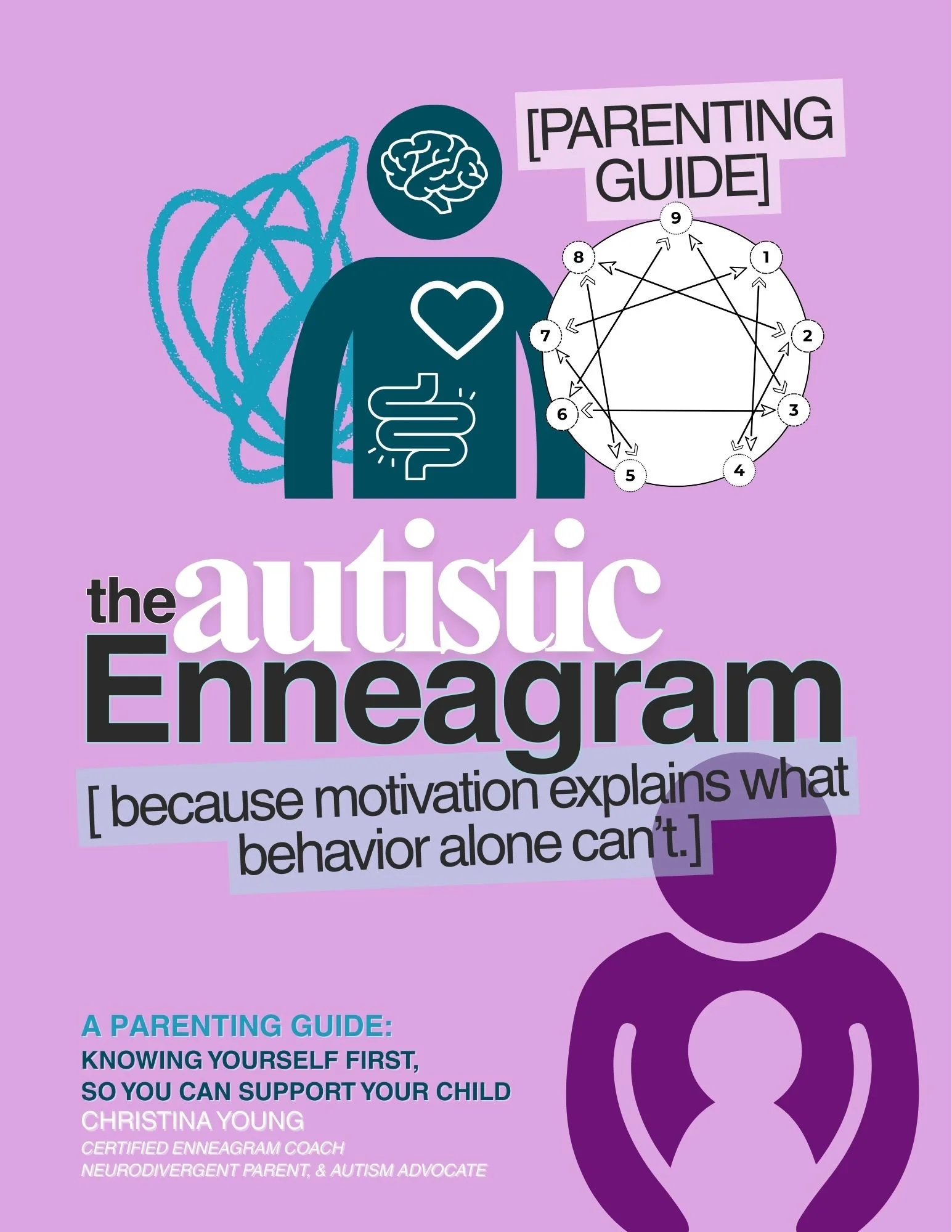
A Parenting Guide to knowing yourself better by understanding your Enneagram Type, so that you can better support your neurodivergent child. This guide provides greater detail about each Parenting Type, clues to understanding your own strategies for self-regulation during the stresses of parenting neurodivergent children, and an introduction on stance work in supporting your child through their own stress.
WHAT TO DO NEXT
Once you begin to understand your own pattern, the next step is noticing how your child experiences stress differently.
Instead of asking, “How do I get my child to behave differently?” — The question becomes, “What does my child’s nervous system need — and how does my own response help or hinder that?”
This shift creates space for more effective support, fewer power struggles, and greater connection — even on hard days.
This approach helps parents move away from constant crisis management and toward sustainable, nervous-system-informed parenting strategies for autistic children.
Understanding Stances:
How We Reach for Connection
Stances describe how people instinctively reach for connection and support when they’re stressed.
They help explain why some children move toward others, some pull away, and others push back — and why parents often respond in predictable ways without realizing it.
Understanding stances helps parents recognize why their autistic child may seek closeness, independence, or control during stress — and how to respond in ways that support regulation rather than escalate distress.
Learning about stances gives you another layer of clarity, helping you tailor your support to what your child actually needs in the moment.