
WELCOME Educators!
First and foremost - thank you for pursuing the profession you are in. As a mom to three autistic kiddos with ADHD who has had the great privilege to work with some of the most dedicated, caring, and selfless humans in positions like yours over the last seven years- I continue to be in awe of everything you do for all of our children. You inspire the work that I pursue here, because if there is anything I can do to make your work less stressful, I feel like it’s my way to give back to you in my own small way. If there’s ever anything I can do to help you better understand or implement this work- please reach out!!! My email is christina@theautisticenneagram.com, and I’m just a click away!
-
Yes, the Enneagram is helpufl for educators of autistic children.
When used as a self-awareness tool (not a diagnostic label), the Enneagram helps educators understand their own stress responses, which directly impacts how effectively they can support an autistic child during dysregulation. -
No. This work focuses on nervous system regulation, connection, and understanding — not compliance, rewards, or punishment.
-
No. This framework starts with the adult. Understanding yourself creates the foundation for more attuned support.
The Enneagram & EDUCATION
The Enneagram is a framework that helps explain how adults respond to stress, pressure, and responsibility. Rather than focusing on behavior alone, it explores the underlying patterns that shape how educators show up — especially during moments of dysregulation, urgency, or burnout.
When applied in educational settings, the Enneagram becomes a professional self-awareness tool, helping educators support autistic and neurodivergent students with greater regulation, clarity, and intentionality.
START WITH YOU FIRST
In schools, we’re often trained to focus on student behavior first.
But research and lived experience consistently show that adult regulation sets the tone for student regulation.
Identifying your own educator regulation pattern helps you understand how you respond under stress — which makes it easier to recognize when your instincts support student regulation, and when small adjustments may better meet a student’s nervous system needs.
***Your test is in process! Thank you in advance for your patience.***
THE 9 EDUCATOR REGULATION TYPES
The Enneagram describes nine distinct regulation patterns that influence how adults respond during moments of stress, conflict, or dysregulation. Each pattern brings valuable strengths into the classroom — and each has predictable stress responses that can unintentionally escalate student behavior.
Understanding these nine educator patterns helps staff move away from one-size-fits-all strategies and toward regulation-informed responses that better support autistic and neurodivergent students.
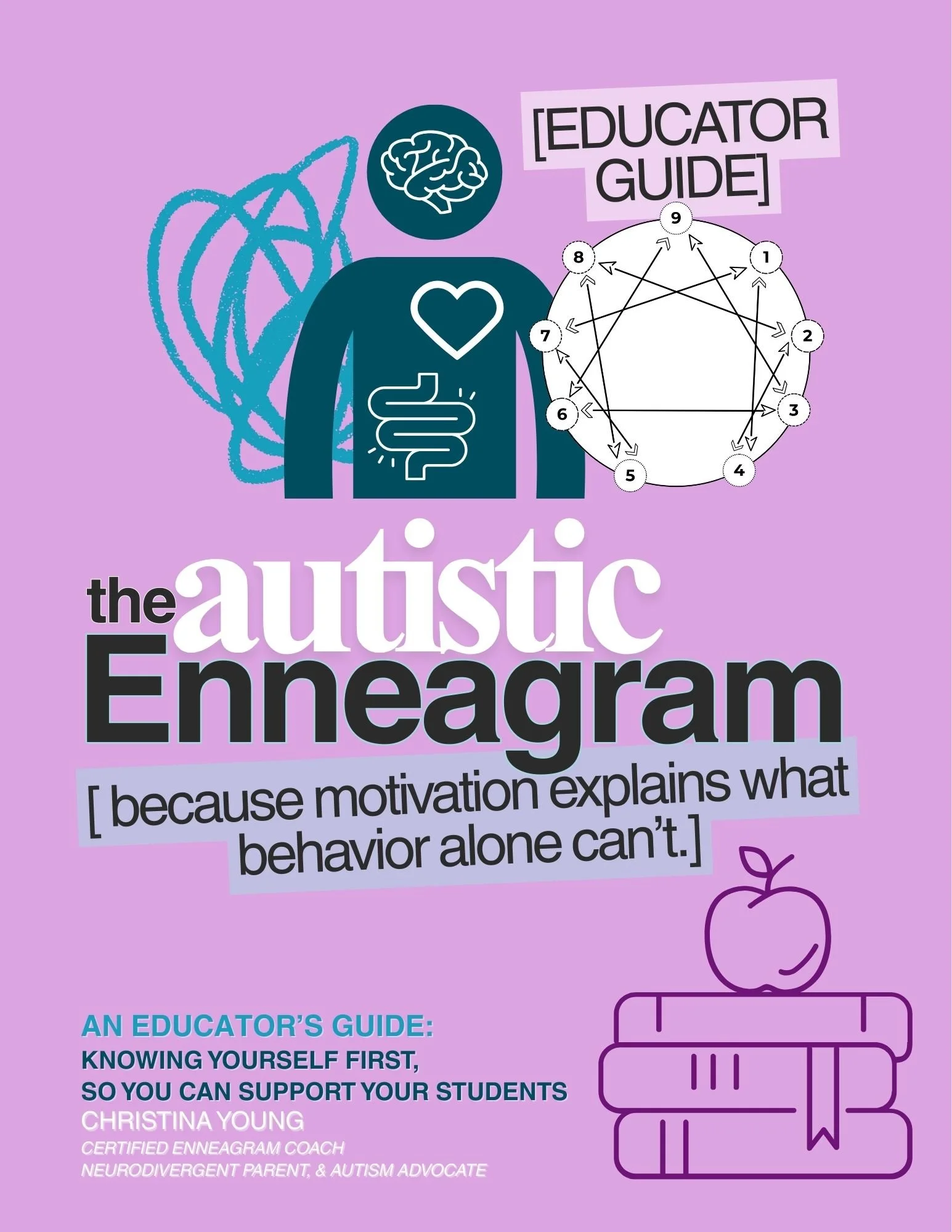
EXTENDED EDUCATOR RESOURCE GUIDE
If the free guide resonated, the Extended Educator Resource Guide offers a deeper, more practical exploration of each educator regulation pattern.
Inside this guide, educators will find:
how each pattern responds under chronic classroom stress
common blind spots that emerge during dysregulation
ways well-intended responses can unintentionally escalate students
concrete regulation practices for educators themselves — not just students
This resource is designed to support sustainable practice, reduce burnout, and strengthen adult-student alignment across learning environments.
WHAT TO DO NEXT
HOW TO APPLY THIS WORK IN THE CLASSROOM:
Once educators understand their own regulation pattern, the next step is learning to recognize student regulation needs in real time.
Rather than asking, “How do I manage this behavior?”
the focus shifts to, “What does this student’s nervous system need — and how does my response support or disrupt regulation?”
This shift helps educators reduce escalation, strengthen relationships, and create learning environments that feel safer and more predictable for autistic students.
Understanding Stances:
How We Reach for Connection
Stances describe how individuals instinctively move toward, away from, or against others when under stress. In classrooms, stances help explain why some students seek closeness, some withdraw, and others push back — especially during moments of overwhelm.
Learning about stances allows educators to:
interpret student behavior through a regulation lens
adjust proximity, language, and expectations
respond with strategies that support nervous system safety rather than compliance